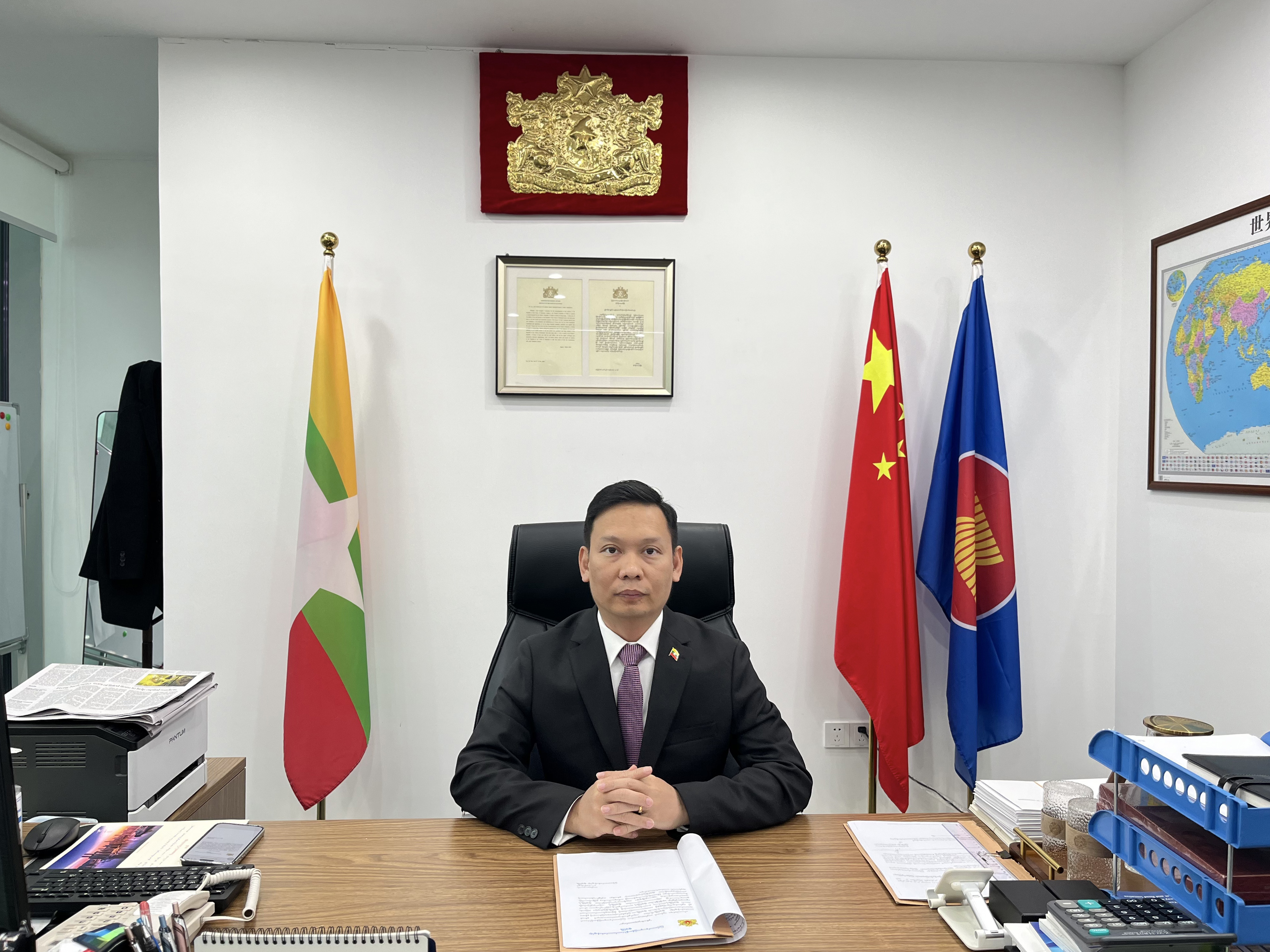
Kyaw Zay Yar Lin, Consul General of the Consulate General of Myanmar in Chongqing
We are committed to building on the foundation of our past successes and working together to create new opportunities for both our peoples.
——Kyaw Zay Yar Lin, Consul General of the Consulate General of Myanmar in Chongqing
China and Myanmar are friendly neighbors connected by mountains and rivers, sharing a profound "Pauk-Phaw" or brotherly friendship. In recent years, economic and trade exchanges between Chongqing and Myanmar have grown increasingly close, with deepening people-to-people ties. In July 2022, the Consulate General of Myanmar in Chongqing was officially opened. Chongqing is working with Myanmar to seize the significant opportunities presented by the China-Myanmar Economic Corridor, deepening practical cooperation in areas such as the joint development of the New International Land-Sea Trade Corridor, technological innovation, the digital economy, agricultural technology, and energy development. Additionally, exchanges in urban governance, disaster prevention and mitigation, education, healthcare, and cultural tourism are being strengthened to achieve higher levels of mutual benefit and contribute to the advancement of the China-Myanmar community with a shared future.
The year 2025 marks the 75th anniversary of diplomatic relations between China and Myanmar. Recently, 《CHONGQING CURRENTS》conducted an exclusive interview with Lin Zhuoyue, Consul General of the Consulate General of Myanmar in Chongqing.

Huge Potential for Cooperation Between Chongqing and Myanmar
Chongqing Currents: Myanmar is an important partner in the joint construction of the "Belt and Road Initiative" and is one of the ASEAN countries with close relations with Chongqing. The two sides have obvious complementary economic advantages and great potential for cooperation. Since the opening of the Myanmar Consulate General in Chongqing more than two years ago, what effective work has been carried out to promote exchanges and cooperation between Chongqing and Myanmar in various aspects?
Kyaw Zay Yar Lin: Since the establishment of the Myanmar Consulate General in Chongqing, China, over two years ago, Myanmar has made significant efforts to enhance cooperation with Chongqing across various sectors. By leveraging the complementary economic strengths of both regions, we have actively worked to build stronger ties.
In July 2024, to further strengthen our economic relations, the Myanmar Consulate General invited a business delegation led by the President of the Union of Myanmar Federation of Chambers of Commerce and Industry, accompanied by the Chairmen of affiliated Myanmar business associations. During this visit, the delegation participated in business matchmaking meetings with the Chongqing Commerce Commission and the China Council for the Promotion of International Trade. These meetings provided a platform for deepening our trade relations and exploring new areas for collaboration, particularly in agriculture, manufacturing, and infrastructure. As Myanmar continues to develop its infrastructure and attract Chinese investment, especially in transport and energy projects, Chongqing's expertise has been of great value. Both regions see considerable potential in expanding these connections, and we expect these partnerships to evolve through continued business dialogues and mutual cooperation.
We have also seen positive developments in tourism and cultural exchange. One of the highlights was the successful organization of a major cultural event in Chongqing's Yuzhong district, where 21 Myanmar artists were invited to showcase Myanmar’s rich cultural heritage. This event not only enhanced mutual understanding but also promoted tourism and cultural awareness, fostering stronger people-to-people connections between our countries. In healthcare, a major milestone was the signing of a Memorandum of Understanding (MoU) between Bishan Hospital in Chongqing and North Okkalapa Hospital in Myanmar. Educational cooperation is another priority, and we have made significant strides. We are working on plans to establish exchanges between universities in Myanmar and Chongqing, creating opportunities for academic collaboration, research partnerships, and student exchange programs.
As we reflect on these efforts, these initiatives reflect the strong and growing cooperation between Myanmar and Chongqing, built on shared goals in trade, culture, healthcare, and education. The work carried out by the Myanmar Consulate General has been crucial in facilitating these exchanges, and we are confident that these efforts will continue to solidify the long-term relationship between our two regions.
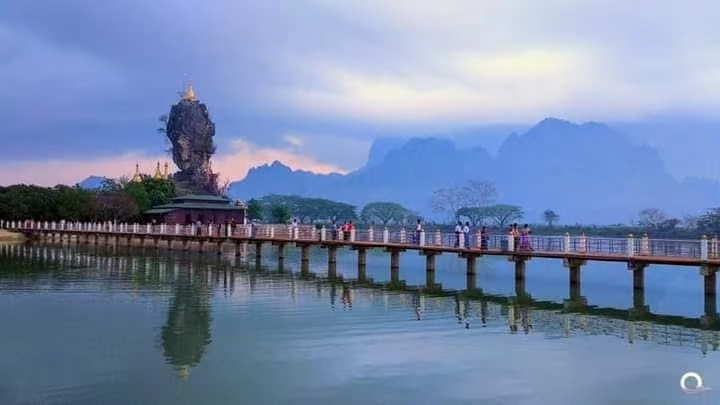
Bright Prospects for Economic and Trade Cooperation
Chongqing Currents: In the first half of 2024, the import and export volume between Chongqing and Myanmar increased by 31.2% year-on-year, and Chongqing's enterprises' investment in Myanmar and projects in Myanmar are being carried out orderly. Could you please introduce the characteristics of Chongqing and Myanmar's economic and trade cooperation?
Kyaw Zay Yar Lin: The growing trade and investment between Chongqing and Myanmar are truly promising. The 31.2% increase in trade volume is a clear reflection of how our cooperation is evolving. One key characteristic of our relationship is the complementary strengths of both regions. Myanmar is rich in natural resources, such as oil, gas, and minerals, while Chongqing is known for its strong manufacturing capabilities and logistical expertise. These strengths naturally align, driving trade in sectors like machinery, electronics, agricultural products, and textiles.
In terms of infrastructure development, a major factor behind the growth is Chongqing's role as a logistics hub. The International Land-Sea Trade Corridor plays a significant role here, facilitating smoother and more efficient trade routes between Myanmar and Chongqing. This enhanced connectivity is making trade between our regions much more efficient and cost-effective.
In addition, Chongqing enterprises are showing increasing interest in investing in Myanmar, particularly in key sectors such as transportation, energy, and logistics. The Myanmar government is actively working to create a welcoming environment for these investments, especially by developing our Economic Zones. These zones offer attractive incentives for investors in sectors like manufacturing and infrastructure, which will contribute significantly to Myanmar's economic growth.
The Consulate General of Myanmar in Chongqing has also been instrumental in facilitating business meetings, such as the ones held in July 2024, where we discussed opportunities for collaboration across agriculture, manufacturing, and infrastructure. It's clear that both sides see a lot of potential to grow these connections, and with continued investment and engagement, I'm confident that our economic ties will keep strengthening.
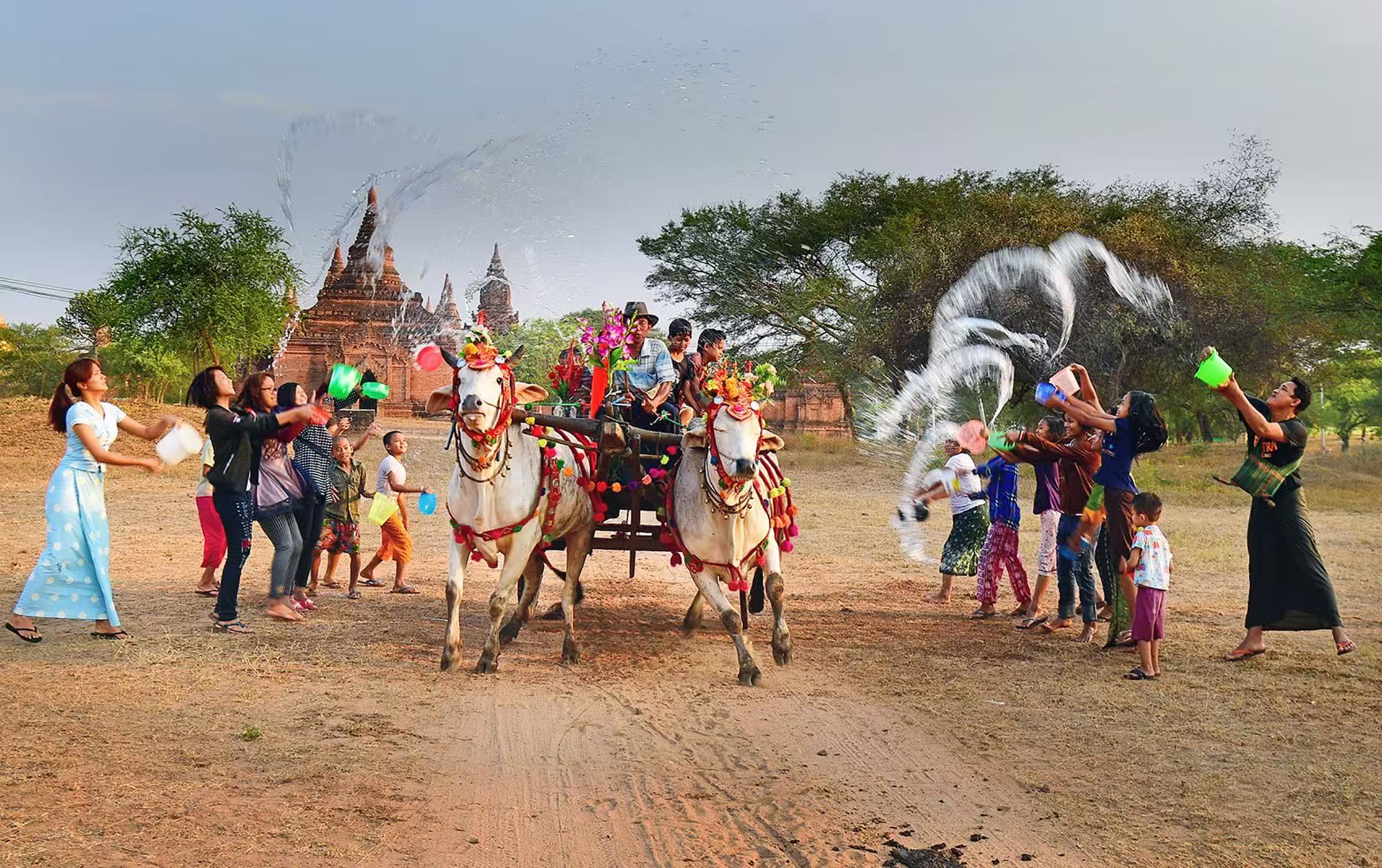
Tax Incentives Strengthen Bilateral Economic Ties
Chongqing Currents: Since December 1, 2024, China has begun to apply a preferential tax rate of zero to 100% of the tax items of products from Myanmar and some other countries that have established diplomatic relations with China. What benefits do you think this will bring to the economic and trade exchanges between Chongqing and Myanmar?
Kyaw Zay Yar Lin: Since the preferential tax policy took effect in December 2024, it's opened up some valuable opportunities for trade between Chongqing and Myanmar. Although the benefits are mainly for customs duties, it still helps Myanmar products become more competitive in the Chinese market, particularly in sectors like agriculture, textiles, and natural resources. This reduction in customs duties makes it easier for Myanmar businesses to export to China at a lower cost.
For Chongqing businesses, this means it's now more cost-effective to import goods from Myanmar, potentially reducing their sourcing costs. It also provides an opportunity for closer business collaboration between the two regions. Chongqing companies may find new areas to invest in Myanmar, particularly in sectors like agriculture and infrastructure, where Myanmar has great potential.
While the impact is more focused on customs duties, it still creates a favourable environment for increased trade and investment, fostering stronger economic connections between Chongqing and Myanmar.

New Opportunities for the New International Land-Sea Trade Corridor
Chongqing Currents: The New International Land-Sea Trade Corridor is not only an important channel for the export of goods from western China but also a bond connecting the "Belt and Road Initiative". The regions along the New International Land-Sea Trade Corridor are full of confidence in the economic and trade opportunities brought by this international corridor. As the operation and organisation centre of the New International Land-Sea Trade Corridor, what cooperation do you think can be carried out between Myanmar and Chongqing in this field?
Kyaw Zay Yar Lin: Well, building on what we've discussed, the New International Land-Sea Trade Corridor really offers a great opportunity for Myanmar and Chongqing to collaborate, especially in infrastructure and logistics. With Chongqing being such a central logistics hub, it can play a big role in helping Myanmar connect more effectively to global markets. The ILSTC improves transport links, making trade routes faster and more cost-efficient, which is a win for both sides.
Looking ahead, there's real potential for joint projects that improve infrastructure and logistics networks. By strengthening these connections, we can not only enhance the flow of goods between our regions but also build a foundation for long-term economic cooperation.
New Plans for 2025
Chongqing Currents: Spring is a time for looking to the future. Could you please tell us about the new plans for promoting China-Myanmar exchanges and cooperation in 2025?
Kyaw Zay Yar Lin: Spring truly symbolizes vitality and new beginnings, and we're very optimistic about the exciting plans we have for China-Myanmar exchanges and cooperation in 2025. With the strong support of the Chongqing Municipal Government, we're moving forward with several key initiatives aimed at further strengthening our ties.
First, we'll be holding an Investment Promotion Forum, which will highlight Myanmar's economic zones to Chinese businessmen from Chongqing and explore new investment opportunities. We're also planning business trips to Myanmar for Chongqing companies, fostering direct engagement and collaboration, all with the great cooperation of the Chongqing Municipal Commerce Commission.
For tourism and cultural exchange, we're very grateful for the ongoing support from the Yuzhong Government, Yuzhong FAO, and Yuzhong Tourism. Their assistance has been essential in organizing successful cultural events, and in 2025, we look forward to expanding these initiatives, bringing our people closer through shared cultural experiences.
On the education front, we're prioritising capacity building for young Myanmar people. Our goal is to facilitate exchange programs not only for students but also for academic faculties. These exchanges will help improve educational practices and foster stronger academic collaborations between Myanmar and Chongqing.
Finally, we plan to extend our healthcare cooperation, continuing our efforts to improve medical services and share best practices between Myanmar and China (Chongqing).
Overall, we are full of hope for the future, and with the continued support of our partners, we believe 2025 will be a year of stronger collaboration and mutual growth in trade, culture, education, and healthcare.
At the End of the Interview, Kyaw Zay Yar Lin Stated, In 2025, we celebrate the 75th anniversary of China-Myanmar diplomatic relations, a significant milestone in our long-standing friendship and cooperation. Over the years, our bilateral ties have grown stronger, founded on mutual respect, shared interests, and a deep commitment to enhancing economic, cultural, and people-to-people exchanges. Myanmar is hopeful to continue expanding our collaboration with China, particularly with Chongqing. There is immense potential to deepen our ties in areas such as trade, investment, education, healthcare, and cultural exchange. We are committed to building on the foundation of our past successes and working together to create new opportunities for both our peoples.