The semi-finals of the 10th Maker China Automotive Remanufacturing SME Innovation and Entrepreneurship Competition kicked off in Chongqing on August 13th-14th. Focused on the automotive remanufacturing sector under the theme “Automotive Remanufacturing. Tongnan Power Creates the Future,” the competition saw nearly sixty teams representing SMEs and startups from across China advance to this semi-final round after fierce competition in the preliminary stage.
The competition is jointly organized by the Cybersecurity Industry Development Center of the Ministry of Industry and Information Technology (MIIT), the Chongqing Municipal Commission of Economy and Information Technology, and the People's Government of Tongnan District, Chongqing. The Tongnan District Commission of Economy and Information Technology serves as the host organizer, with co-organizers including Chongqing Vocational College of Electric Engineering, the Tongnan District Science and Technology Bureau, and Chongqing Investment Promotion Association. The event aims to stimulate innovation, promote the green transformation of the automotive industry, and provide a platform for entrepreneurs to showcase their talents.
After intense preliminary competition, dozens of teams across two categories successfully advanced to the semi-finals.
Competition Launch: Focusing on a New Chapter in Automotive Remanufacturing
The semi-finals adopted a hybrid model featuring online project presentations via Tencent Meeting with real-time offline expert scoring, ensuring fairness and efficiency. Under an “8+5” format, each participant had 8 minutes for project presentation followed by 5 minutes for judges’ Q&A, comprehensively showcasing technological prowess and business potential. Projects in the Enterprise Group were evaluated by 7 judges based on technical capability, business acumen, and team strength. Projects in the Startup Group were assessed by 7 judges emphasizing innovation, maturity, practicality, and environmental friendliness. This setup not only tested the core strength of the projects but also highlighted the competition's emphasis on sustainable development.
The competition addressed hot topics in automotive remanufacturing, aligning with the national “dual carbon” goals, and provided SMEs and startups with industrial partnership opportunities. A competition official stated that the rapid development of the automotive industry has created significant demand for end-of-life vehicle recycling. Tongnan’s strategic location at the core of the Chengdu-Chongqing Economic Circle, positioned between these two major automotive markets, facilitates the efficient collection and echelon utilization of scrapped vehicles from both areas. Currently, Tongnan is actively integrating into Chongqing’s new energy vehicle industry chain, prioritizing the development of post-market sectors like end-of-life battery echelon utilization and vehicle dismantling, to drive cluster development.
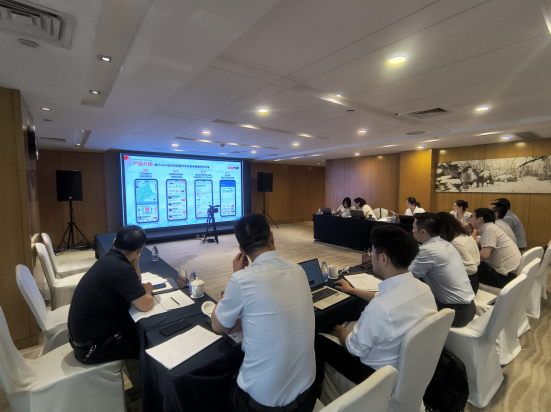
The competition adopted a hybrid format combining online project presentations with real-time offline scoring by expert judges.
Semi-Final Showdown: Enterprise and Startup Groups Showcase Expertise
On the first day of the semi-finals (Aug 13th), the Enterprise Group teams took the stage first. Projects covered areas like new energy vehicle supporting technologies and smart mobility solutions. Teams showcased their best solutions amidst intense competition.
Chongqing Lens Energy Technology Co., Ltd impressed with its “One-Step Lithium Carbonate Zero-Carbon Intelligent Manufacturing Project for Battery Regeneration.” This technology optimizes processes to increase production capacity while reducing lithium-ion loss, achieving cost savings exceeding 50% in energy consumption, auxiliary materials, and labor, alongside an over 80% reduction in equipment investment. Shanghai Jinchi Auto Parts Remanufacturing Co., Ltd. presented its “Automotive Remanufacturing Recycling System AI Identification & Damage Assessment Innovation Project.” Utilizing 3D visual scanning with pure blue light synchronous tracking at a rate of 1.9 million points per second – 200 times faster than manual inspection – and an AI dual-recognition engine achieving 99% model accuracy, it significantly boosts recycling efficiency.
Beijing Ansonic Technology Co., Ltd. introduced “Ansheng - Creating Immersive Acoustic Experiences for Multi-Scenario Automotive Applications,” enabling each passenger to independently choose audio content without disturbing others. Through sound masking and acoustic field control, it ensures conversations within different zones of the vehicle remain private.
Xin Lailai Energy Technology (Shenzhen) Co., Ltd. developed “Core Materials and Low-Cost Processes for Solid-State Batteries.” This technology enables the continuous production of electrolyte membranes, replacing traditional liquid electrolytes and separators with solid electrolytes. Their all-solid-state battery cells are pollution-free, non-combustible, support ultra-fast charging, and offer high energy density, outperforming conventional non-solid-state batteries in various metrics.
The Startup Group semi-finals on August 14th were equally competitive, with teams focusing on innovations in new energy vehicles and intelligent driving technologies. The Ketu Research team's “On-board Intelligent Software System” features a driving behavior analysis module that innovatively integrates facial micro-expression recognition (91.2% accuracy), achieving a fatigue driving warning response time of ≤0.3 seconds. The Wang Weiping team's "World-Leading Automotive Intelligent Driving System Transforming the Driving Era" prioritizes safety upgrades, effectively preventing accidental acceleration and rear-end collisions to significantly reduce traffic accidents. These projects represent not only cutting-edge technology but also a perfect blend of environmental friendliness, practicality, intelligence, and user-friendliness.
Looking Ahead to the Finals: Tongnan Aims to Become an Industrial Hub
After two days of intense competition, the semi-finals concluded successfully. The top 20 projects from the Enterprise Group and the top 15 from the Startup Group advanced. They will compete in the offline finals held in Tongnan on August 28th. The list of finalists includes established projects like lithium battery regeneration and AI identification from the Enterprise Group, alongside rising stars like intelligent driving systems from the Startup Group, showcasing the diverse innovation ecosystem within the automotive remanufacturing field.
Judges remarked that the overall quality of the semi-final projects was high, with strong technological breakthroughs. Many solutions have already been successfully commercialized and established partnerships with major domestic automakers. These projects are poised to drive transformation in the new energy vehicle aftermarket.
The competition serves not only as a contest but also as an industrial incubator. Organizers explained that outstanding projects will receive cash prizes, priority for establishing operations in Tongnan with access to government funding and policy support, and potential recommendation for inclusion in the national “Maker China Top 500 Enterprise” and “Top 300 Startup” rankings. Moving forward, Tongnan will leverage the competition's outcomes to “build ecosystems and extend chains.” By focusing on attracting leading companies and fostering industrial ecosystems, Tongnan aims to bring in influential industry leaders in sectors like end-of-life vehicle dismantling and power battery echelon utilization, accelerating the industry’s development.